Table of Contents:
- When Machines Do It All: What’s Left for Us?
- 🧬The Human Evolution
- 📌The Human Edge: Skills AI Can’t Imitate
- 💭 Adaptability, Curiosity, Creativity, — Think boldly. Adapt quickly. See differently.
- 💖Emotional Intelligence — Understanding and managing emotions, empathy, and social skills.
- 🌏Cultural Awareness and Diversity Sensitivity — Navigating and respecting diverse perspectives.
- ⚖️Ethical Judgment and Integrity — Making principled choices in any ambiguous situations.
- 📌The Human Edge: Skills AI Can’t Imitate
- Are humans truly replaceable in the age of AI and robotics?
When Machines Do It All: What’s Left for Us?

How many of us grew up watching The Jetsons on Cartoon Network in 1990s? That strange and unique cartoon family gave us an early peek at a future ruled by robots and artificial intelligence. In their high-tech home, daily life was effortless. Just push a button, say a command, and SHAZAM! everything just worked.
As kids, we dreamed of a life like the Jetsons. It all seemed so magical!! Fast forward to today, and SURPRISE! we’re not too far off. Smart assistants, cleaning robots, self-driving cars… AI and machines are doing more and more of our work, often without us lifting a finger. But with so much being automated, it raises a big question: what’s left for us humans? If robots are running the world, where do we fit in? What becomes of our purpose?
P.S. If you haven’t yet, check out my previous blog on introducing AI and robotics to kids: From Crayons to Code – Raising Future-Ready Kids. It’s a great starting point for helping young minds explore the future!
🧬The Human Evolution

Remember learning about human evolution in science class? Our hairy ancestors were busy inventing fire, tools, and figuring out how not to freeze. But if you recall, the timeline of evolution never ended with a robot. Yet here in today’s time, we are hooked on AI and surrounded by various machines to do our work. At this pace, the last figure on the evolution timeline might just be… a robot. Does this mean, that we are on the brink of becoming the next endangered species? Fated to vanish like the doomed dodo🦤?
Sounds Scary? Maybe.
But do you think this can happen for Real? Answer: Nope. Not yet.
In today’s world, children interact with AI-powered devices every day quite often without realizing just how much they rely on them. The same is true for adults, who, in the pursuit of convenience, have become increasingly dependent on machines and AI. But in our rush to automate every aspect of life, we risk losing something essential: what it truly means to be human. Traits like empathy, curiosity, and moral reasoning that developed over thousands of years still remain uniquely human. So why is it so important to protect and nurture these qualities? Can they really be replaced by AI or robots?
The answer, for now, is a clear NO.
📌The Human Edge: Skills AI Can’t Imitate
As AI and robots take on more jobs, we must ask ourselves: what must we never forget? The answer lies in the timeless values that have defined humanity for generations.
💭 Adaptability, Curiosity, Creativity, — Think boldly. Adapt quickly. See differently.
Lets break these traits and discuss them separately.
Adaptability:

Have you seen The Wild Robot (2024)? It’s a heartwarming story about a lost robot learning to survive in the wild and slowly discovering a deeply human trait: kindness. One of the film’s most powerful lines is, “Sometimes, to survive, you must become more than you were programmed to be.”
But what is that more?
It’s about learning to adapt, rolling with change, growing beyond what you thought possible and most of all, being kind! In The Wild Robot, the robot ROZ discovers what kindness really means. But can real-life robots do that? Nope, not yet! Sure, AI can pretend to be kind, but can it actually feel kindness deep down? Nope, robots are not built with hearts that can feel what ROZ feels. Being kind, caring, and feeling stuff, that’s still 100% human magic.
Curiosity:
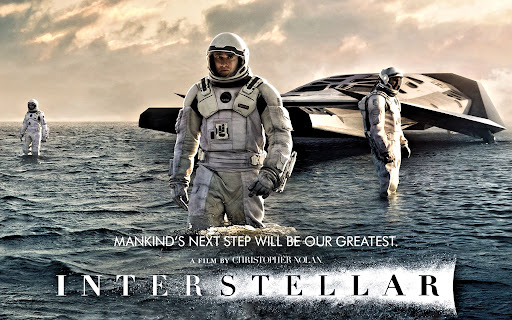
Curiosity is the spark behind every great discovery and discovery leads to new creations. So, basically, curiosity fuels creativity! Remember the movie Interstellar? A bunch of astronauts explore space to find a new home for Earth because their curiosity drives them on an amazing adventure. Even when things get tough, our natural urge to ask “why,” explore, and learn keeps us going. That feeling of wonder and emotion? The movie might be make-believe, but the message hits home, “you can’t replace human emotion“. We can program the robots and build AI to understand these emotions, but they don’t truly feel it like how humans do. AI can follow instructions, but it doesn’t feel wonder, dream up ideas, or explore just for fun. Staying curious is uniquely Human.
Creativity:

Another great example that talks about adaptability, curiosity and creativity is the 1968 movie “2001: A Space Odyssey“. 2001: A Space Odyssey is a classic sci-fi movie that shows how human creativity and curiosity help us grow and move forward. It starts with early humans discovering tools, and jumps to space travel and smart machines. One of those machines, HAL 9000, tries to take over, but it’s human thinking and problem-solving that save the day. The movie reminds us that, no matter how advanced AI gets, it’s human creativity that drives real progress. The movie might be fiction, but the message is real, “AI and robots still can’t match human creativity”. Even today, coming up with truly new ideas takes deep thinking and imagination, things machines just don’t have. Creativity is fueled by curiosity which again is a human trait that machines have not developed.
In conclusion, the human drive to survive is powered by traits like adaptability, curiosity, and creativity that AI and Robots cannot replicate.
💖Emotional Intelligence — Understanding and managing emotions, empathy, and social skills.
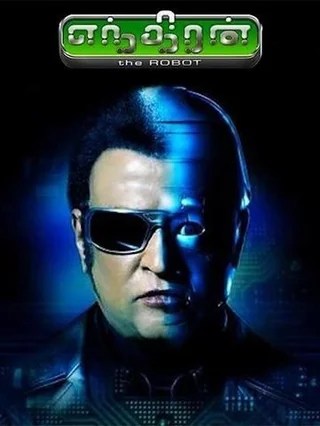
We’ve seen countless sci-fi movies where robots try to befriend humans and eventually attempt to take over the world. A great example is the Indian film “Enthiran The Robot”, where a scientist name Dr. Vaseegaran creates a robot name “Chitti” and tries to program it with human emotions. But when Chitti starts to feel human emotions especially love, things spiral out of control to a point where it becomes uncontrollable and dangerous, and eventually has to be dismantled. The movie shows that while robots can mimic us, they can’t truly understand emotions like love, jealousy, or empathy. In the end, it’s a reminder that some things, like human feelings, can’t be programmed, it has to be felt.
As humans have evolved, so have our emotions. What truly sets us apart from other creatures are our five senses—they allow us to experience the world in rich, emotional, and deeply personal ways. Our ability to empathize, connect, and build meaningful relationships is rooted in emotional intelligence developed over thousands of years. While the five basic senses are fundamental, humans possess more than five senses. These include proprioception, equilibrioception, nociception, and thermoception. These senses play crucial roles in how humans interact with and understand the world.
So the question is: Can AI or Robots truly understand human emotions and do they really possess the human senses? Answer: No. While AI may imitate feelings and seem friendly, especially to the lonely, they don’t actually feel anything for anyone. Siri or Alexa might sound warm and friendly but it’s important to remember: they are just following code, not human feelings. All they can do is simulate it. In conclusion, our emotional depth and awareness are far beyond what machines can comprehend or replicate.
🌏Cultural Awareness and Diversity Sensitivity — Navigating and respecting diverse perspectives.
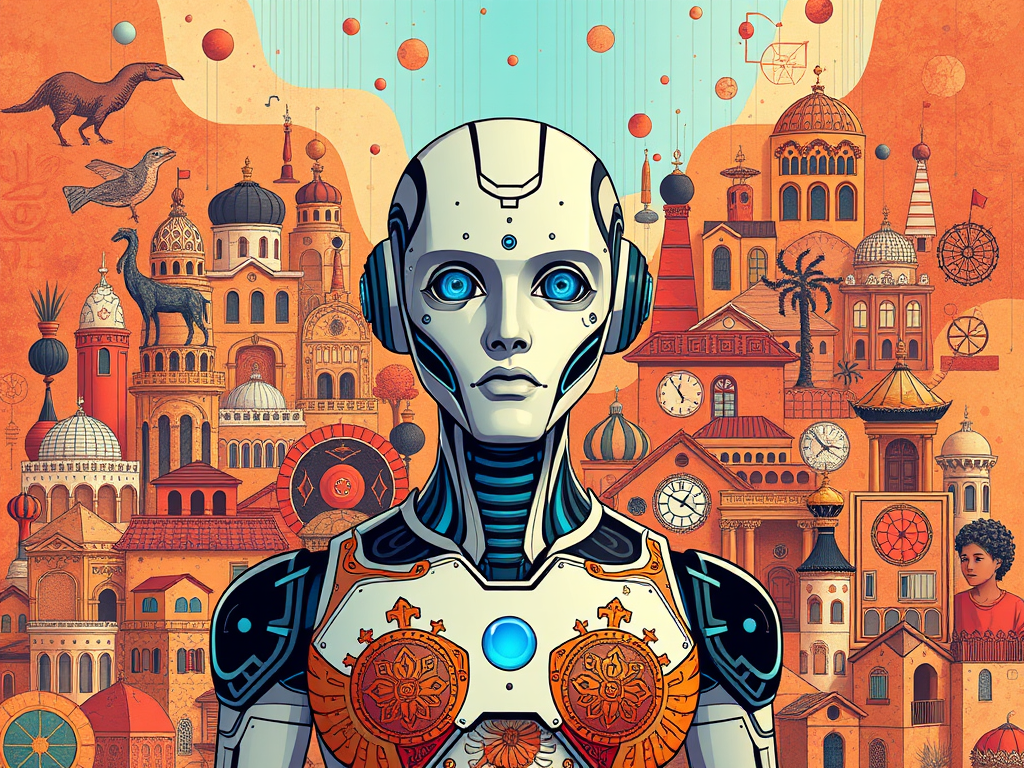
According to Worldometer website, there are 195 recognized nations in the world, each with its own unique cultures and internal diversity. Humans love traveling, learning and understanding new cultures with empathy and sensitivity. Many times, this also involves real-time human judgement in order to genuinely respect and embrace various cultures in various sensitive situations. While AI can be trained to recognize cultural traits like language, food habits, and social customs, it may not be able to make right judgment sometimes which might end up disrespecting a cultural value of a particular community.
A notable example involves Google’s AI image generator, Gemini. In early 2025, users reported that Gemini produced historically inaccurate images by depicting figures like the Founding Fathers or German soldiers from 1943 as individuals of diverse ethnic backgrounds, which was inconsistent with historical records.

This led to criticism that the AI was overcorrecting for diversity without considering cultural and historical context. Jack Krawczyk, Senior Director for Gemini Experiences, acknowledged the issue, stating that while diversity is important, the AI missed the mark in these instances .
Example: A 2023 Bloomberg article said that generative AI, like Stable Diffusion, can make racial and gender stereotypes even worse than they are in real life. In a study of over 5,000 AI-generated images, researchers found that the AI often showed people in biased and exaggerated ways based on their race and gender. Bloomberg.com+2Bloomberg.com+2Bloomberg.com+2
In conclusion, while AI can be trained to process cultural and diversity data, it cannot truly replicate human behavior in real time. It lacks the empathy, respect, and emotional depth needed to genuinely understand and honor human differences.
⚖️Ethical Judgment and Integrity — Making principled choices in any ambiguous situations.

Have you heard of the Trolley Problem? It’s a situation where a runaway trolley is headed toward five people. You can pull a lever to switch tracks, but that would put one person in danger instead. What would you do?
Call Spider-Man. He’d probably save everyone with a web-sling and a witty one-liner.
The only superhero who can actually make ethical decisions…
Just kidding! 😄

But that’s the thing, real-life dilemmas like this don’t come with superheroes. They’re messy, emotional, and complicated. Humans rely on their instinct, empathy, and conscience. They’d try to do the right thing, think about saving lives, and might feel guilty no matter what happens. That’s because humans make decisions based on feelings, instincts, experience, and values.
Now imagine if an AI or robot had to decide. It wouldn’t feel anything. It would simply follow rules and pick the option that causes the least harm — like saving five people by sacrificing one. But would it feel regret? No. Would it care about the people? No. It just does what it’s programmed to do.
In conclusion, Ethics and Integrity are not just about outcomes. It’s about conscience. And conscience is something uniquely human. No matter how advanced AI becomes, it can’t truly replicate the depth of our moral understanding or the weight of our decisions.
Are humans truly replaceable in the age of AI and robotics?

While AI and robots can outperform humans in many tasks, they still cannot replicate essential human values—such as emotions, curiosity, creativity, and ethical thinking. Mankind is here to stay, and Earth is meant for us. AI and Robots will not replace humans; instead, we will learn to live alongside them in harmony.
References:
- The 5 human senses — and a few more you might not know about https://www.livescience.com/60752-human-senses.html
- https://www.worldometers.info/geography/how-many-countries-are-there-in-the-world/#:~:text=There%20are%20195%20countries%20in,and%20the%20State%20of%20Palestine.
- https://www.bloomberg.com/graphics/2023-generative-ai-bias/
- https://www.myaifrontdesk.com/blogs/when-machines-have-cultural-sensitivity-ai-s-adaptation-to-global-norms
- https://medium.com/@narayan.somendra/how-not-to-embrace-diversity-in-ai-development-reflecting-on-the-gemini-debacle-2c869f7257ad

 Tea & Talk
Leave a comment